Quick Start :
HOW THE BROKEN TOOL DETECTOR WORKS
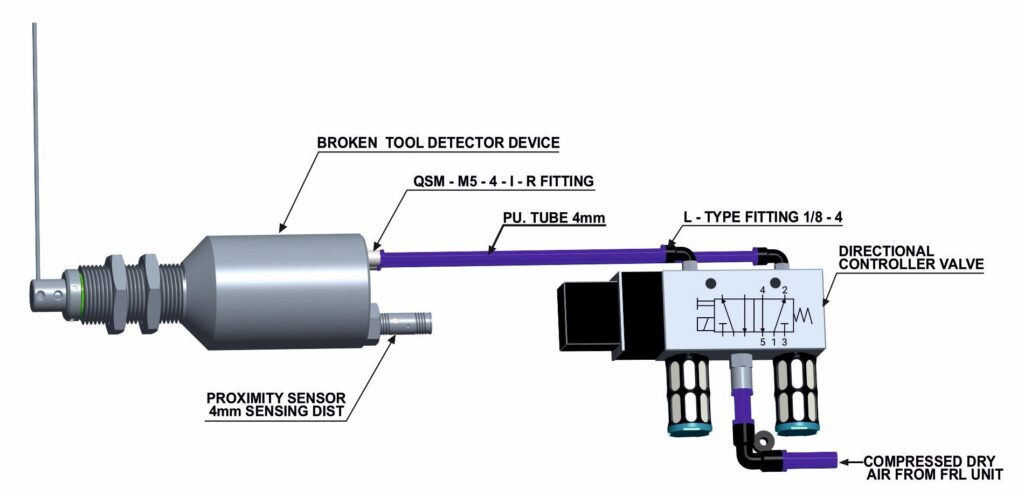
INSPECTOOL Broken Tool Detector detects the normal tool or broken tool just by conforming to the rotating angle of a needle. The INSPECTOOL Broken Tool Detector is actuated by compressed air energy that causes rotary motion of the needle in 90 degrees if a tool is broken and results in generation of an input signal to stop a machining operation. It can be easily installed on any CNC, SPM and Drilling machines and even used for detecting parts and checking the removal of parts.
HOW TO CHANGE ROTATING DIRECTION OF THE NEEDLE
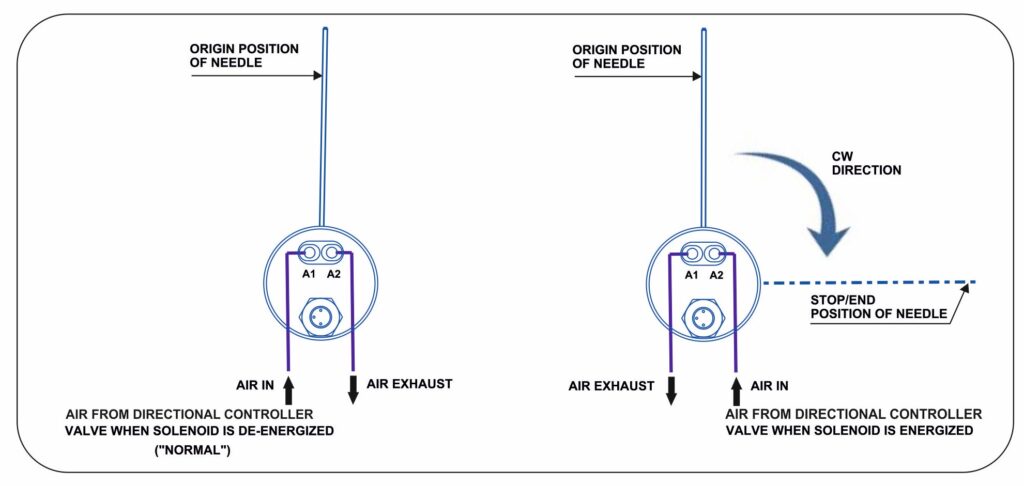
With the use of model : BTD — SD4— LR90, figure no. 4A and 4B shows different rotating positions of the needle from the origin / start position to the end position.
If the compressed air from the energized direc_onal controller valve is supplied to the application port A2 then needle will rotate in a clockwise (cw) direction as shown in figure No. 4A.
If the compressed air from the energized directional controller valve is supplied to the application port A1 then needle will rotate in a counterclockwise (CCW) direction as shown in figure no. 4B
INSTALLATION DIAGRAM
NEEDLE ALIGNMENT
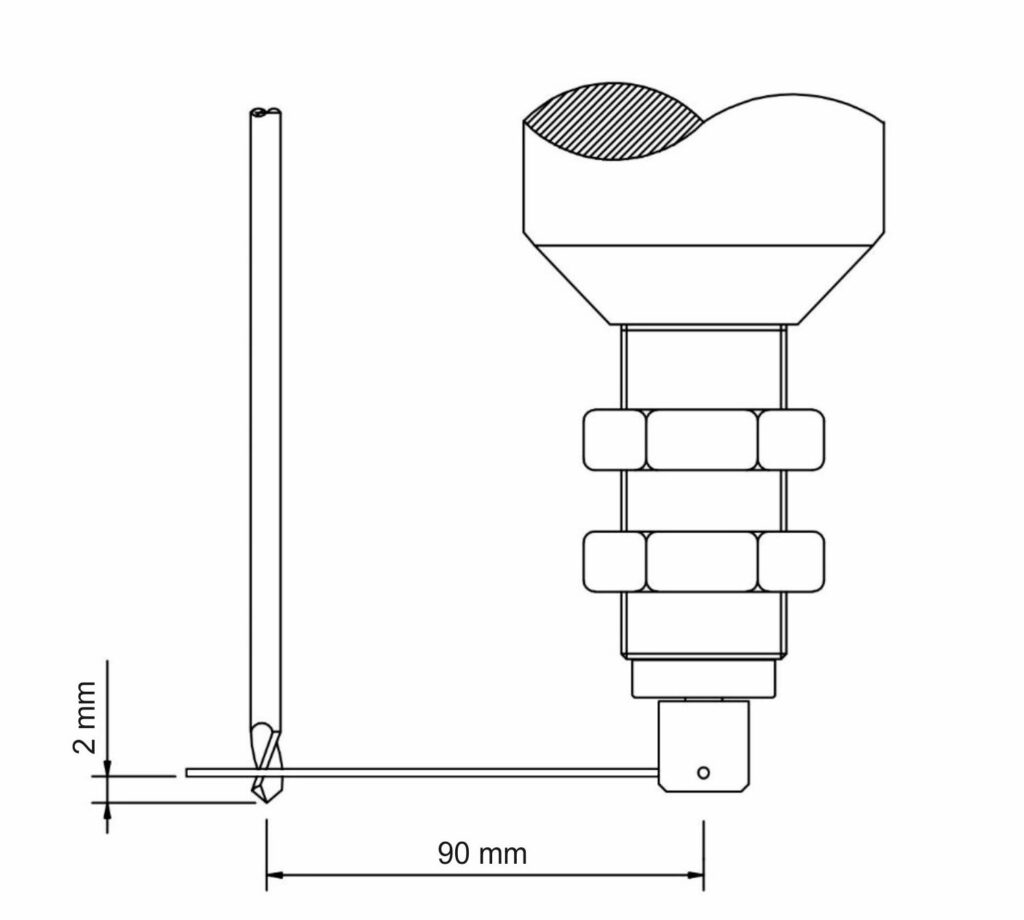
The standard length of the needle is 100 mm from the centre of axis and needle up to 160 mm in length can be used. The touching part of the needle is at least 90 mm from the centre of axis and needle should be in contact with the tool at least 2.0 mm from the tool tip as shown in figure.
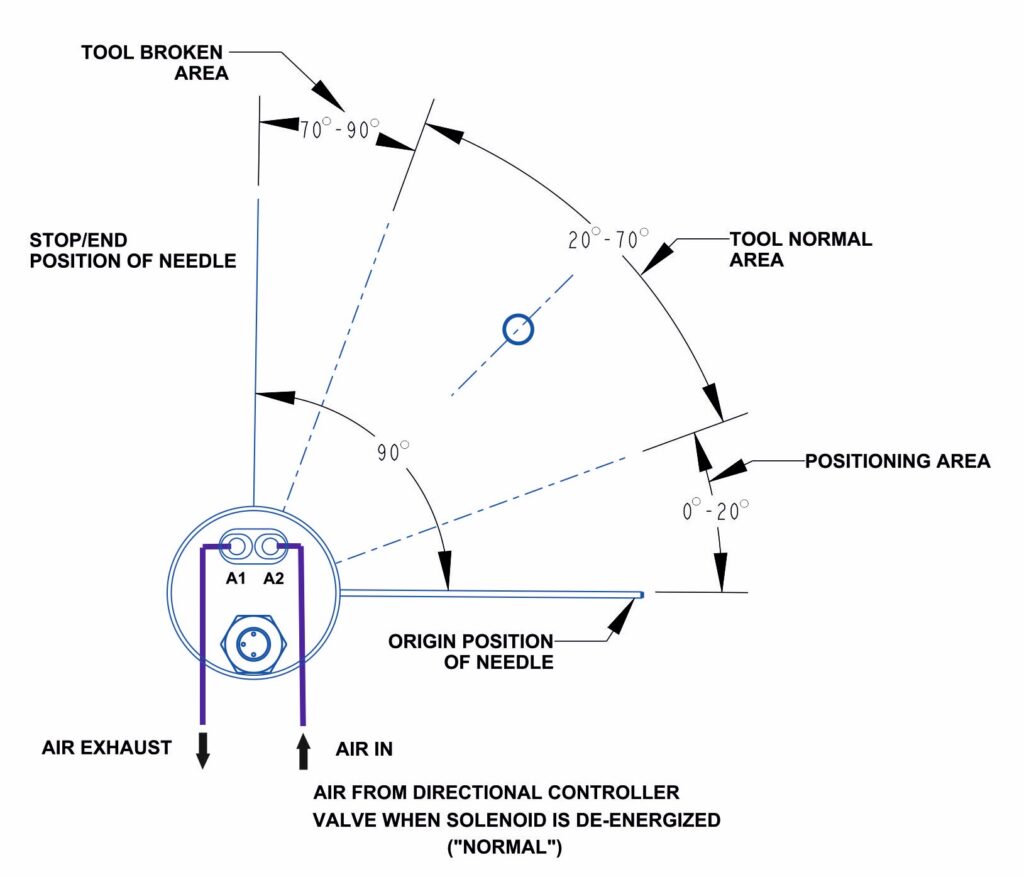
ORIGIN POSITION OF TOOL DETECTOR IF NEEDLE ROTATES IN A CLOCKWISE (CW) DIRECTION
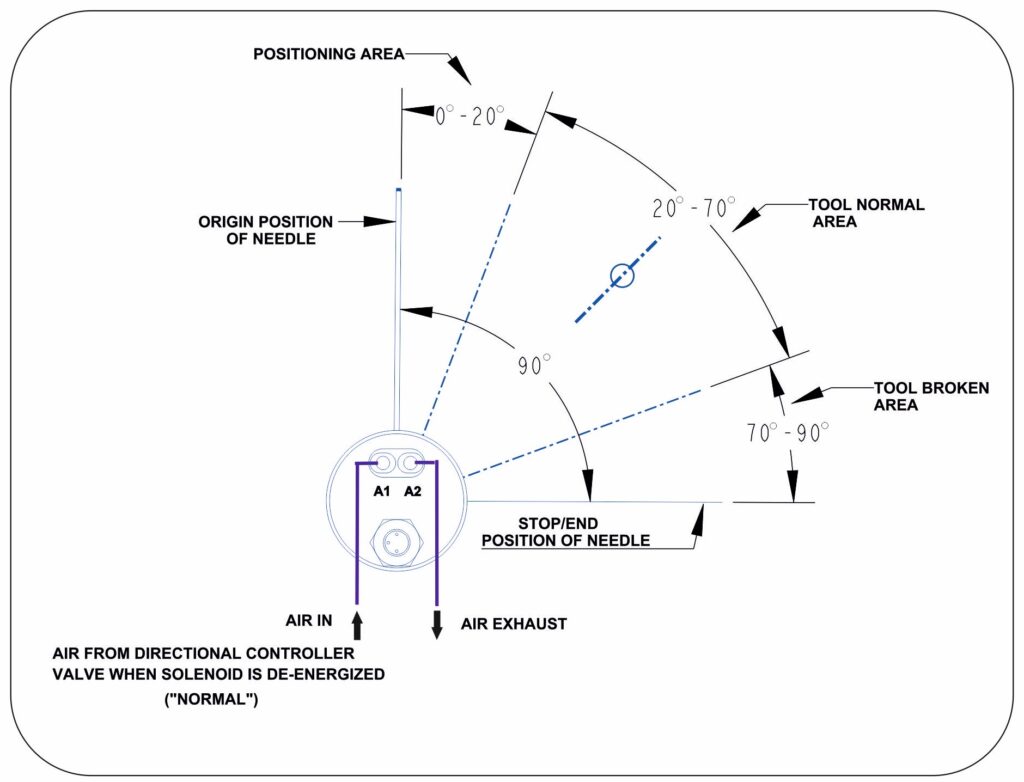
Suppose the needle rotates in a clockwise (CW) direction, and the directional controller valve solenoid is de-energized. Then the shaft, along with the needle,rests in 0 degree. In this case, the proximity sensor will generates the first input signal, indicating that the tool detector device is at the origin position and ready to be used for detection of tool breakage, as shown in Figure.
SENSING AREA OF NEEDLE IN 90 DEGREES WHEN NEEDLE ROTATES IN A CLOCKWISE (CW) DIRECTION
ORIGIN POSITION OF TOOL DETECTOR IF NEEDLE ROTATES IN A COUNTERCLOCKWISE (CCW) DIRECTION
Suppose the needle rotates in a counterclockwise (CCW) direction, and the directional controller valve solenoid is de-energized. Then, the shaft, along with the needle, rests in 0 degree. In this case, the proximity sensor will generates the first input signal, indicating that the tool detector device is at the origin position and ready to be used for detection of tool breakage, as shown in Figure.
SENSING AREA OF NEEDLE IN 90 DEGREES WHEN NEEDLE ROTATES IN A COUNTERCLOCKWISE (CCW) DIRECTION
PROXIMITY SENSOR SETTING METHOD
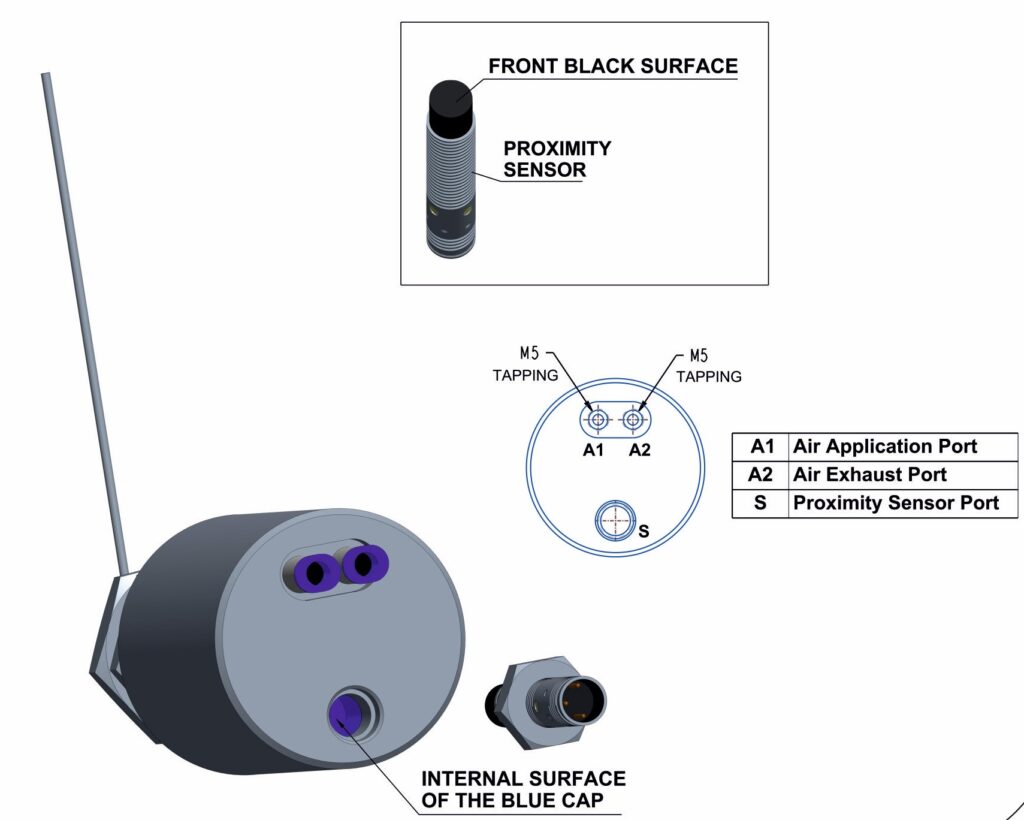
Carefully insert and rotate the proximity sensor into the sensor mounting port (S) until it stops, then tighten the lock nut.
Avoid applying excessive force while tightening the proximity sensor. Stop rotating the proximity sensor when its front black surface touches the internal surface of the blue cap of the broken tool detector device. If you continue rotating the sensor beyond this point, you may break the inside blue cap of the broken tool detector device which will jam the needle and damage the broken tool detector device.
Make sure to stop rotating the proximity sensor when it touches the internal surface of the blue cap, and do not rotate it further. Then, tighten the lock nut.
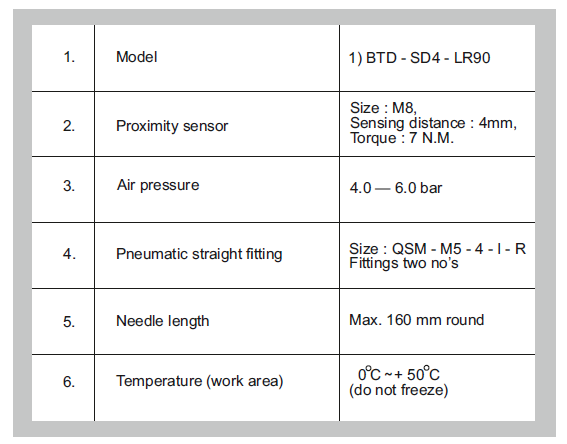
SPECIFICATIONS
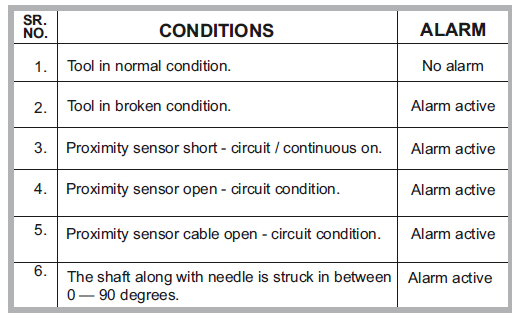
ALARM CONDITIONS
The broken tool detector gives following alarm conditions with use of the
PLC logic.
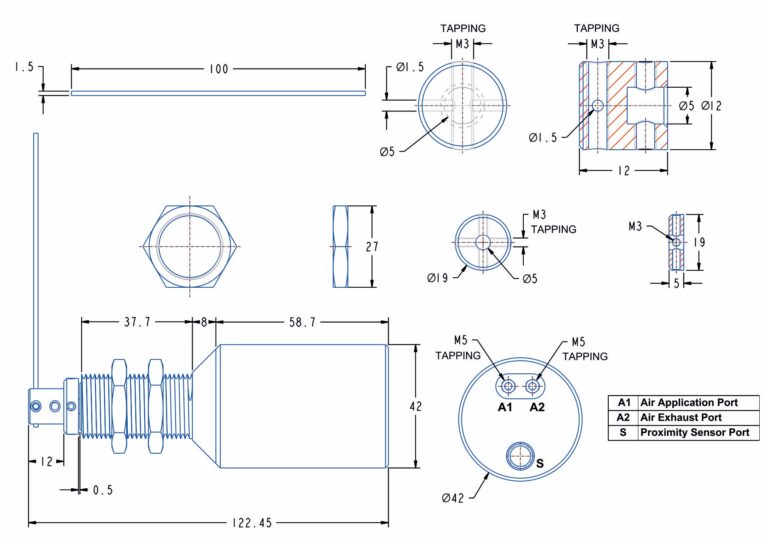
DIMENSIONS OF BROKEN TOOL DETECTOR